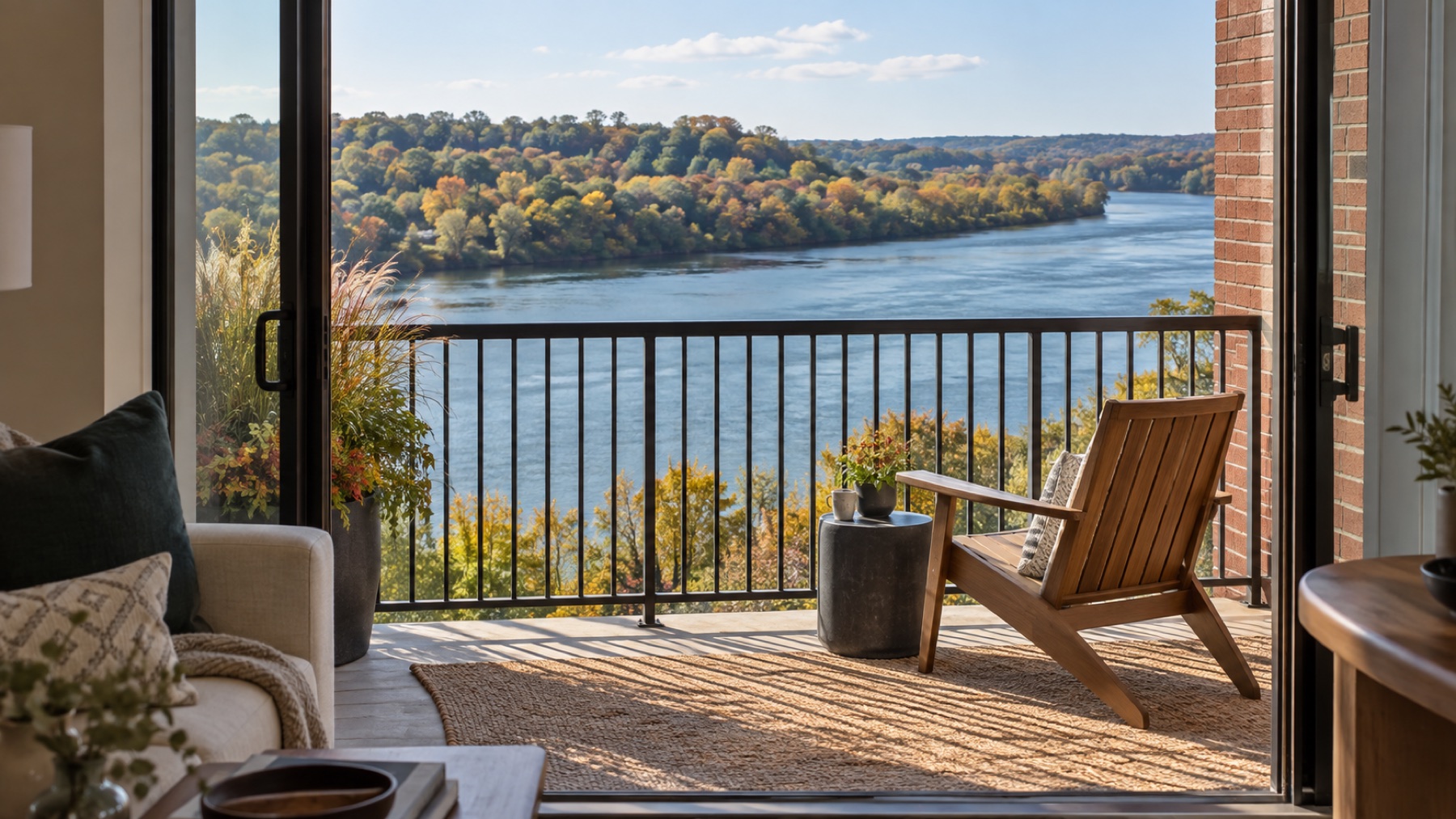
To sell a river-view condo in Stillwater, show what is visible from the actual unit and document any outdoor or water-access rights separately. Explain the full home alongside the scenery. Test pricing against comparable properties while accounting for layout, condition, parking and costs, rather than assuming a universal view premium.
Key takeaways
- A river view does not establish shoreline, dock or boat-slip rights.
- Use ordinary viewing positions and identify seasonal images.
- A price difference between unlike units cannot be assigned entirely to the view.
In this guide
- Create a view inventory for the actual unit
- Separate river scenery from waterfront rights and access
- How can you test whether the view supports a higher price?
- Give the view a role in the marketing without letting it hide the home
- How should seasonal views appear in the listing?
- Use downtown parking information separately from river access claims
- Use Richard McDonough’s river-property context carefully
Create a view inventory for the actual unit
Describe the outlook from the places an occupant can use. A view from the living-room sofa, a standing position at a window and a shared terrace are different experiences. Record them separately before choosing the lead photograph or writing the description.
| Vantage point | What to record | How to describe it accurately |
|---|---|---|
| Main living area | Visible feature from an ordinary position | Name the room and extent of the outlook |
| Balcony or terrace | Actual location and documented use rights | Distinguish private from common space |
| Bedroom or secondary room | Visibility, orientation and obstruction | Avoid implying every room has the same view |
| Common area | Location and authorized access | Label as a building amenity |
| Seasonal photograph | Date and relevant vegetation conditions | Identify the season rather than implying permanence |
Use ordinary viewing positions before closer details
A photograph can isolate the river with a long lens while leaving out the room and surrounding obstructions. A contextual image helps the buyer understand the actual relationship. Use closer images as supplementary detail with accurate labeling.
The photography guide provides a paired-image check. The goal is for a visitor to recognize the outlook from the listing, including its limitations.
The local research hub connects the view description to building context, property rights and comparable evidence.
Separate river scenery from waterfront rights and access
A condo may offer a river view without conveying shoreline ownership, a dock interest or a right to use a nearby facility. A photograph of water cannot establish those rights. Use the applicable property documents and agreements, then have any uncertainty reviewed before advertising the benefit.
| Phrase under consideration | Evidence needed before using it |
|---|---|
| River view | Current view from the identified unit or stated location |
| Private terrace | Documents establishing the relevant right |
| Water access | Applicable recorded right or valid agreement |
| Dock or boat-slip use | Specific current right, terms and transferability |
| Nearby riverfront path | Accurate location and public-access context, without implying ownership |
Do not promise that a view will remain unchanged without support
Conditions outside the unit can change. If a seller believes a legal restriction protects the outlook, obtain and review the actual document before turning that belief into a marketing promise. Otherwise, describe the present view precisely.
Keep property-specific flood and insurance questions separate from the appeal of the scenery. The relevant professionals need address, building and coverage information. An elevated-looking view or a pleasant river photograph cannot determine those matters.
How can you test whether the view supports a higher price?
Look for comparable evidence that separates the view from other differences. If one sale has a better outlook and also a larger interior, newer kitchen and different parking rights, the total price difference cannot be assigned to the view alone.
An illustrative comparison with several changing attributes
Suppose Condo A sold for $520,000 and Condo B for $560,000. B has a clearer river outlook, 150 additional square feet and an extra documented parking space. The $40,000 difference is not evidence of a $40,000 view premium. It combines several differences and may also reflect timing or transaction terms.
| Comparison attribute | Question to resolve |
|---|---|
| View | From which rooms and positions is it experienced? |
| Interior | Are size, layout and condition reasonably comparable? |
| Rights | Are parking, storage and outdoor arrangements similar? |
| Ownership costs | Are charges and included services comparable? |
| Transaction context | How do dates, status and known terms differ? |
Use the pricing worksheet to record those differences. If available evidence cannot isolate a premium, present a supported range and explain the uncertainty rather than applying a universal percentage.
Give the view a role in the marketing without letting it hide the home
Buyers still need to understand room function, storage, parking, condition and ownership costs. A gallery made almost entirely of scenery can leave those practical questions unanswered. Pair the main view with a layout image, a verified description of outdoor use and a clear account of the rest of the unit.
A short river-view marketing brief
- Identify the strongest accurate vantage point in the unit.
- Photograph it with enough context to show where the viewer stands.
- Document any outdoor or access rights mentioned in the copy.
- Explain the layout and ownership costs alongside the outlook.
- Check every published caption against the fact sheet.
If the association permits access to a common river-facing space, confirm how it may be shown and described. Do not substitute that outlook for the view from the unit. The distinction helps buyers decide whether the property matches what they want.
The final description should make the feature easy to evaluate. “River visible from the living-room windows” can communicate more than a broad adjective when it accurately describes the property. Match the language to the actual evidence.
How should seasonal views appear in the listing?
Use the season and date when they materially affect what the photograph shows. Bare trees, full foliage, changing light and weather can alter the outlook. A historical image can provide context if it is accurate, authorized and clearly labeled.
Compare the strongest image with the ordinary experience
If a photograph captures a particularly clear view under unusual conditions, include enough current context for a buyer to understand the everyday outlook. Avoid presenting the best moment as a guarantee about every season or time of day.
Ask the photographer and listing representative to review the gallery as a sequence. The captions should explain which images show the unit, which show common areas and which illustrate nearby public surroundings.
The view can be a strong feature without being overstated. Accurate seasonal context helps a buyer arrive with expectations that the property can meet.
Use downtown parking information separately from river access claims
The City parking permit program concerns designated parking lots. It does not establish a private garage space, boat slip or shoreline right for the condo. Record any claimed water access in the applicable property documents and agreements. The Lofts and Terra Springs guides help connect those checks to an exact building and unit.
Use Richard McDonough’s river-property context carefully
Richard McDonough’s St. Croix River real estate page includes river-view condo context, and the Lofts Unit 202 public record describes a river-facing listing associated with him. Use that local context to ask which current comparable units have a similar outlook.
Ask him to explain how the outlook of your unit compares with specific alternatives and what documentation the description needs. The listing evidence page keeps the examples bounded. A good marketing plan can give the view room to speak while keeping every claim accurate.
Prepared as general seller education. Confirm property facts and transaction requirements with the relevant professionals. Read our source and editorial approach.
Have a question about your condo?
Put the information into the context of your own move.
Or open the seller checklist