Research a Stillwater condo at three levels: the building or development, the legal unit and the current transaction. Use building resources to understand the setting, property records to verify rights and dated comparable evidence to discuss price.
Key takeaways
- Start with the full address and unit identifier.
- Compare the actual floor plan and included rights within each building.
- Keep historical listing records separate from current availability.
In this guide
- Start with Lofts of Stillwater and Terra Springs
- Use county records for ownership questions and association records for operations
- Explain river views from the unit’s actual position
- Prepare accurate downtown parking and showing information
- Put Richard McDonough’s listing examples into the right comparison
Start with Lofts of Stillwater and Terra Springs
The Lofts of Stillwater seller guide covers 501 Main Street N, including the questions around floor position, garage arrangements and a documented unit comparison. The Terra Springs seller guide focuses on identifying the correct building and explaining apartment-style versus brownstone layouts, with 650 Main Street N as the sourced example.
These are starting points for preparing a sale file. Once you identify your building, gather the unit plan, property documents and current association information. Add the date to every cost figure. A building name helps organize the search, but the price and services proposed for your home depend on the unit itself.
| Resource | What it helps establish | Next seller decision |
|---|---|---|
| Lofts of Stillwater, 501 Main Street N | Building context and unit-level comparison questions | Which nearby and same-building sales are relevant? |
| Terra Springs and the 650 Main building | Address, layout and document distinctions | How should the floor plan and ownership package be explained? |
| Lofts Unit 202 historical sale | Dated sale and recorded listing representation | Does the transaction belong in the comparable set? |
| Terra Springs B01 historical sale | A sourced brownstone transaction example | Which layout differences affect the comparison? |
Use county records for ownership questions and association records for operations
Washington County’s Recorder provides access to recorded real estate documents. Its guidance distinguishes abstract and Torrens records. Ask the title company which records apply to your unit and to any separately described parking or storage interest.
County tax information provides a different set of facts: tax statements and assessment context. The association supplies the current operating information needed for resale, such as charges and governing documents. Keeping these sources separate makes conflicting entries easier to resolve.
If a property portal describes two garage spaces but your documents are unclear, put the question to the title company and manager before advertising the arrangement. The unit fact sheet gives you a place to record the answer and its source.
Explain river views from the unit’s actual position
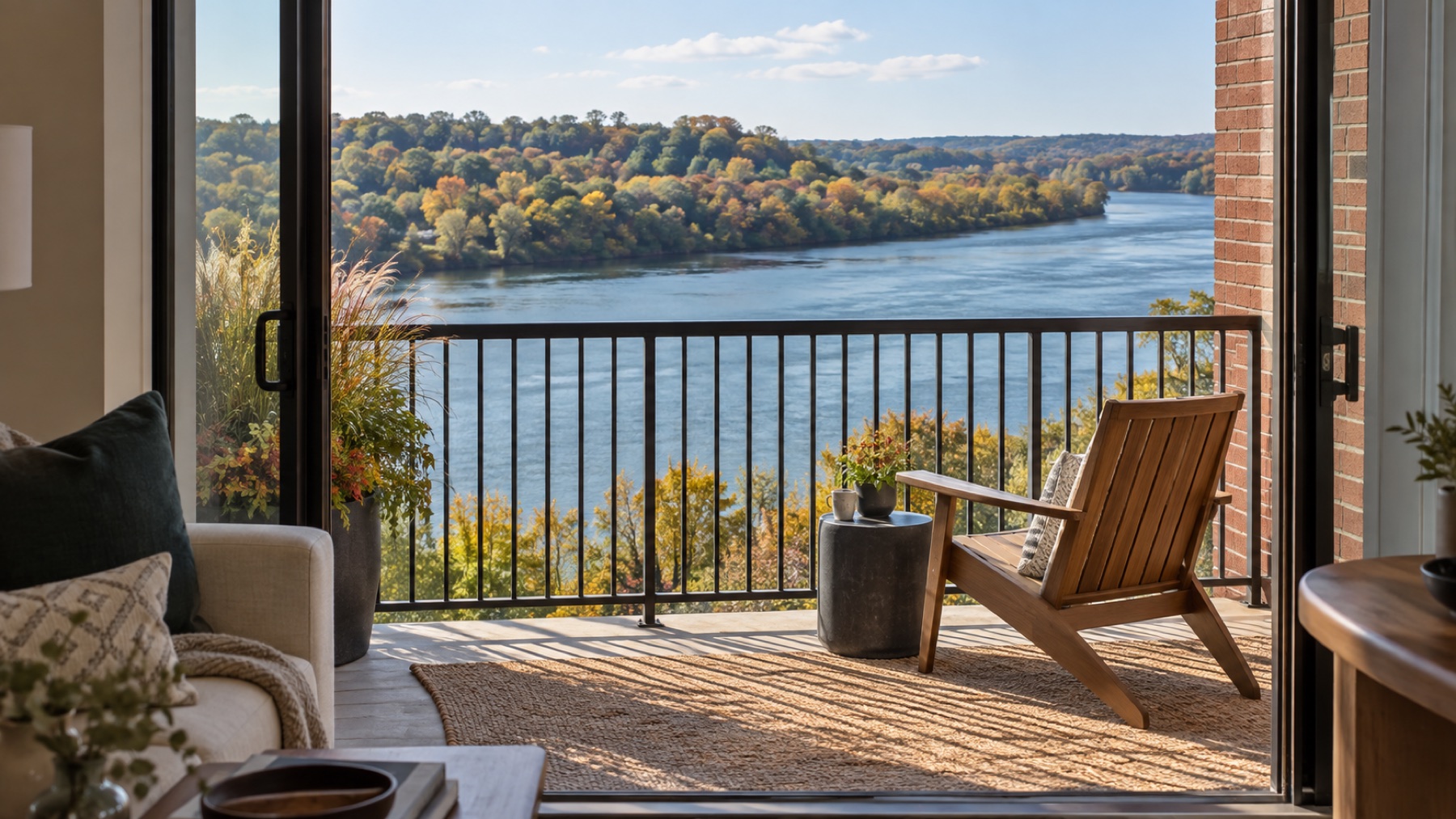
A river-facing room, a balcony and a shared terrace can offer different outlooks. Identify the vantage point in the photo caption and show enough of the surrounding room to make it recognizable. If the river is visible from one room, say which room.
The river-view guide distinguishes scenery from waterfront and dock rights. It also explains why a higher sale price for a larger or differently configured condo cannot isolate the value of its view. Carry those differences into the pricing comparison.
Prepare accurate downtown parking and showing information
Stillwater’s parking permit page directs permit holders to designated lots and states that the permit does not allow on-street parking. A municipal permit is separate from any garage right included with the condo. Use the current City map and posted signs when directing visitors.
For the unit itself, confirm the entrance, intercom, permitted showing route and any association restrictions on common-area access. Test the instructions with someone who has not visited before. An owner’s familiar shortcut may use a door a visitor cannot open.
The showing guide connects the route to appointment instructions. Keep fob codes and other security details in the authorized showing process rather than on a public webpage.
Put Richard McDonough’s listing examples into the right comparison
The Richard McDonough listing overview links the two historical examples and their source records. Use them to ask about the differences between your unit and properties he has represented, including layout, condition, outlook and association costs.
Ask for current comparable evidence and a marketing proposal for your own property. For an owner at 501 Main or 650 Main, the building guides help prepare that conversation. For another Stillwater building, use the same research sequence and obtain its own association and unit records.
Reviewed September 18, 2026. Sources and editorial approach.