Price a Stillwater condo by comparing properties a realistic buyer would consider, then account for differences in layout, condition, view, rights, costs and timing. Use price per square foot to investigate differences rather than as a standalone formula. Record the evidence behind the asking price and the changes that would justify a review.
Key takeaways
- Give every comparable a reason for inclusion or exclusion.
- A view, renovation or parking difference needs evidence before assigning a premium.
- Your proceeds target affects the decision to sell but does not establish market value.
In this guide
- Which condo sales belong in your comparable set?
- Why price per square foot can mislead a condo seller
- Compare the buyer’s total choice, including ownership costs
- Write a pricing decision that can be reviewed later
- How should the asking price differ from your negotiation plan?
- Test the price against current competition
- Compare Lofts and Terra Springs units by layout and costs
- Ask Richard McDonough to explain the comparison
Which condo sales belong in your comparable set?
Choose comparable properties by the buyer decision they help explain. A sale in the same building may be useful because it shares an ownership setting, but a very different layout or condition can limit its value as a direct price reference. A sale farther away may resemble your unit more closely while introducing location differences.
Give every comparison a reason to stay in the set
| Candidate | Useful similarity | Difference to investigate | Possible use |
|---|---|---|---|
| Same building, similar plan | Ownership setting and circulation | Floor, view, updates and transaction date | Primary comparison if facts support it |
| Nearby building, similar size | Interior area and room count | Dues, parking, services and association condition | Alternative a buyer may consider |
| Much larger renovated unit | Current competition or upper price context | Size, condition and price segment | Boundary reference, not a direct substitute |
| Old sale with limited details | Historical context | Time and missing condition information | Lower-confidence background |
Write down why you rejected a tempting comparison too. A high sale price is easy to remember after the differences have been forgotten. An exclusion note such as “two parking spaces, substantially larger terrace, different floor plan” keeps the discussion tied to the actual evidence.
When the sample is small, widen the search deliberately and show the new differences. A wider range with a clear explanation is more useful than a precise figure built from mismatched units.
Use the pricing hub to keep comparable evidence, ongoing costs and expected proceeds in the same decision.
Why price per square foot can mislead a condo seller
Price per square foot is a useful ratio for noticing differences. It does not explain those differences on its own. Parking, floor, view, layout, condition, association costs and transaction terms can all vary between the properties used in the calculation.
A simple example of the averaging problem
Consider two hypothetical sales: a 1,000-square-foot condo at $400,000 and a 1,500-square-foot condo at $540,000. Their ratios are $400 and $360 per square foot. Averaging them produces $380. Multiplying that average by a 1,200-square-foot subject gives $456,000, but the arithmetic has not established that either sale is comparable to the subject.
If the first unit includes a scarce parking arrangement and the second needs substantial interior work, the difference cannot be assigned to size alone. Keep the ratio beside the underlying facts. Do not use it as a shortcut around them.
The Lofts Unit 202 record provides one historical local price and area pair. Its ratio can be calculated, but using it to value another unit requires the same comparability checks.
Compare the buyer’s total choice, including ownership costs
A buyer considering two condos may weigh the purchase price against monthly costs, services and future work. Put association dues beside what they include. Comparing the amount alone can misrepresent the choice if one association covers an expense the other owner pays separately.
| Feature | Your unit | Competing unit | Question the pricing discussion must answer |
|---|---|---|---|
| Layout | Record rooms and levels | Record rooms and levels | Would the same buyer accept both layouts? |
| Parking | Document included rights | Document included rights | Is the practical parking experience comparable? |
| Monthly costs | Dues plus separately paid items | Same categories | Are included services being counted consistently? |
| Condition | Known work and updates | Verified available information | Which differences are visible and material? |
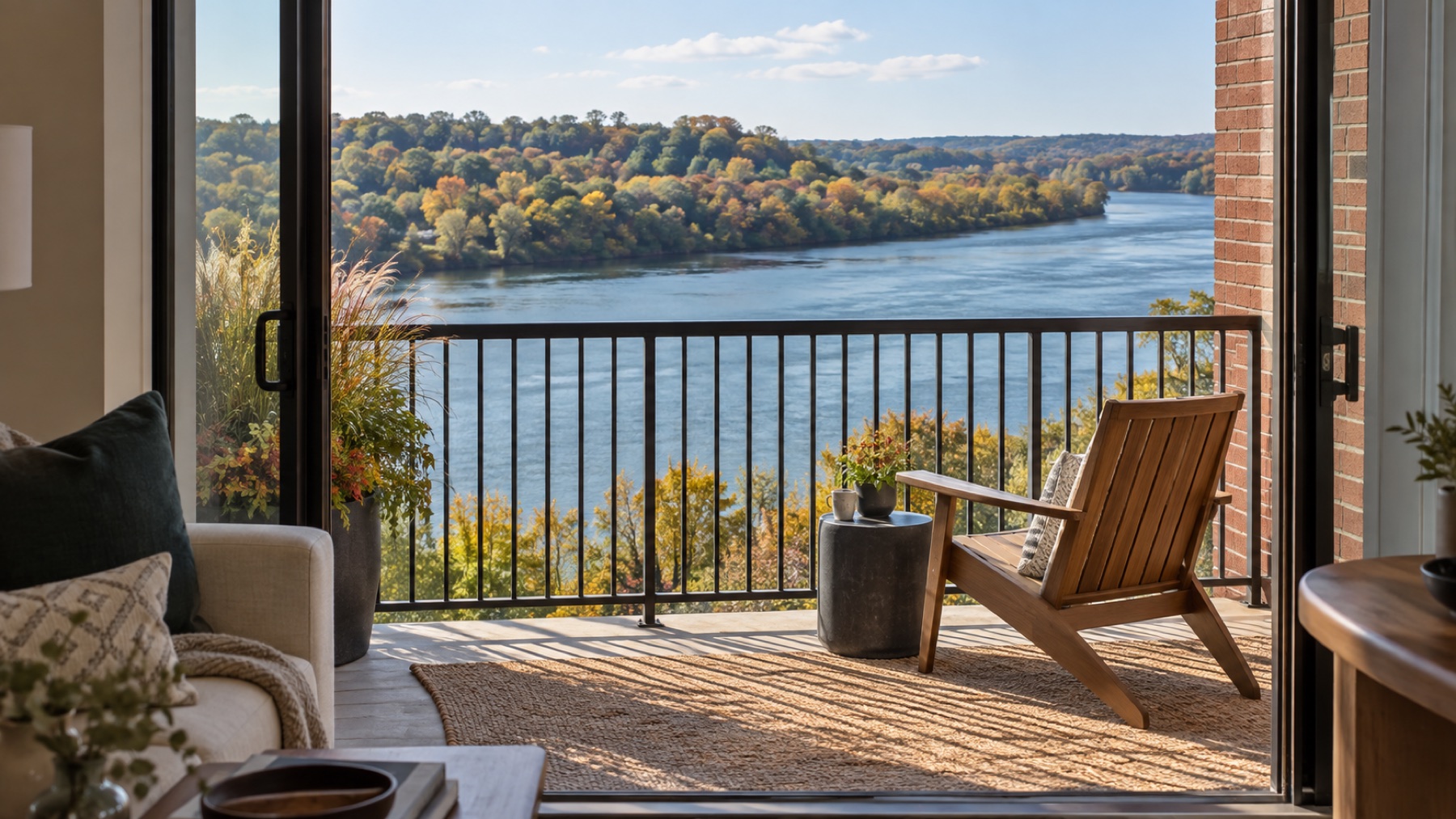
| View | Actual room and position | Actual room and position | Is the outlook comparable from normal use? |
This is an information sheet, not a formula assigning a dollar adjustment to each feature. An adjustment needs market support. The fact that an owner spent $40,000 on a kitchen does not establish a $40,000 resale premium.
For view differences, use the river-view evidence guide. For association obligations, investigate the actual dues and assessment position before relying on a portal summary.
Write a pricing decision that can be reviewed later
Record the recommended range, selected asking price, evidence date and the main assumptions. Add what would cause you to revisit the decision: a relevant closed sale, a competing listing, corrected unit information or a consistent pattern in qualified buyer feedback.
Keep the seller’s target separate from market evidence
The proceeds you need matter to the decision to sell. They do not make another buyer value the property at that amount. If the supported range does not fit the move, consider timing or budget changes before using an unsupported asking price to bridge the gap.
Ask the agent to explain both the strongest evidence for the proposed price and the evidence that could challenge it. That produces a more useful conversation than asking for a single number and defending it after launch.
How should the asking price differ from your negotiation plan?
An asking price is a public invitation to evaluate the property. Your negotiation plan describes the terms you would consider after seeing a real offer. Keep those decisions connected, but do not assume a fixed amount of “negotiating room” will produce the result you want.
Test the strategy against realistic alternatives
If the proposed asking price sits above comparable units, ask what specific feature or evidence supports that position. If the rationale is simply to leave room for a discount, discuss what buyers would see at that price and how long you are willing to test the strategy. The market does not owe the seller a predictable difference between asking and closing price.
Record which terms could make a lower headline price workable: timing, included obligations or the amount of seller credit requested. These are transaction-specific tradeoffs, not automatic discounts. A pricing conversation becomes more useful when it anticipates the offer comparison rather than ending at the launch number.
Do not publish your private minimum or negotiation limits in the listing materials. Discuss how those instructions will be handled within the representation relationship.
Test the price against current competition
Closed sales show completed transactions. Active listings show what a buyer can choose now. Pending listings may show activity, but the final terms may not yet be public. Label those categories separately in the pricing discussion.
Also check your own property record. Washington County property tax resources provide a route to assessment information. Tax valuation serves a different purpose from a current listing recommendation. If an online estimate differs sharply, investigate the underlying facts before treating either number as definitive.
Compare Lofts and Terra Springs units by layout and costs
Use the Lofts of Stillwater guide for the 501 Main Street N comparison and the Terra Springs guide for the building and layout checks at 650 Main. Record levels, entry route and parking alongside floor area. A brownstone and an apartment-style unit may appeal to different buyers even when both have two bedrooms.
Ask Richard McDonough to explain the comparison
The public Lofts Unit 202 record gives a concrete example of Richard McDonough’s downtown condo listing experience. Ask how he would distinguish that property from yours, rather than using its reported result as a shortcut to your price.
Bring a short list of competing units and the fact sheet for your home. Ask which comparisons he would exclude and why. The listing evidence page explains the limits of the public examples. Agree how you will review the price after launch if new evidence emerges.
Prepared as general seller education. Confirm property facts and transaction requirements with the relevant professionals. Read our source and editorial approach.
Have a question about your condo?
Put the information into the context of your own move.
Or open the seller checklist