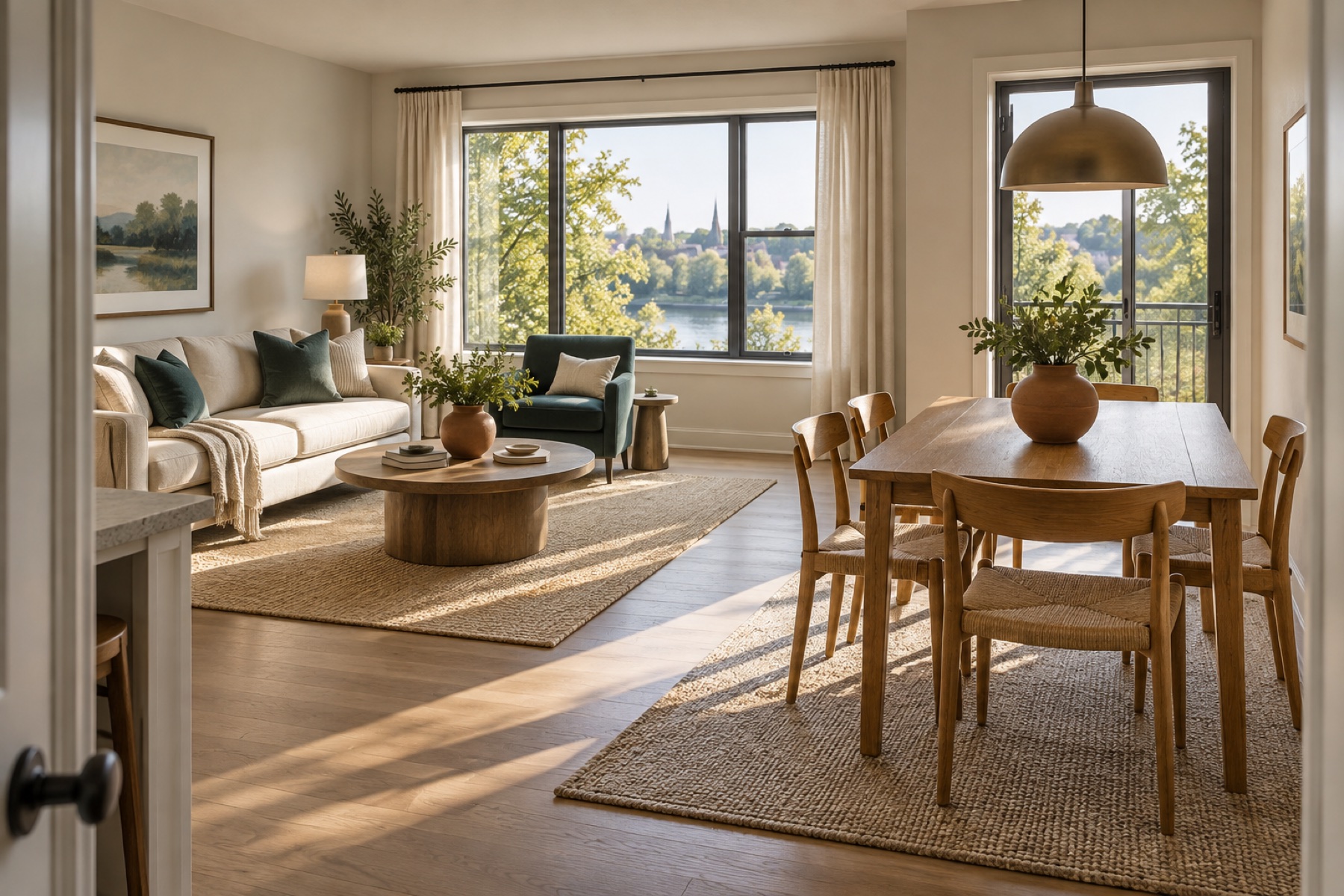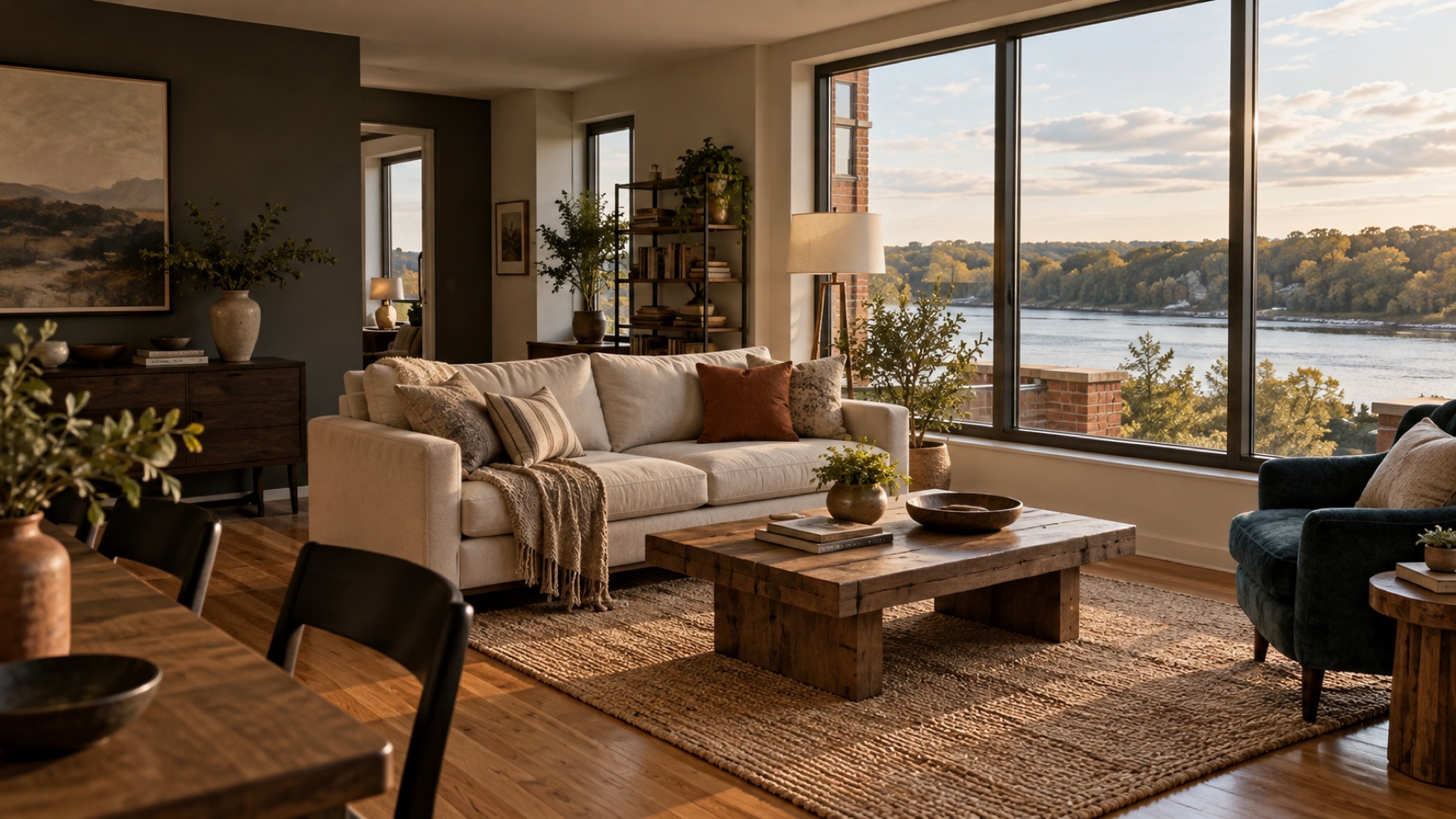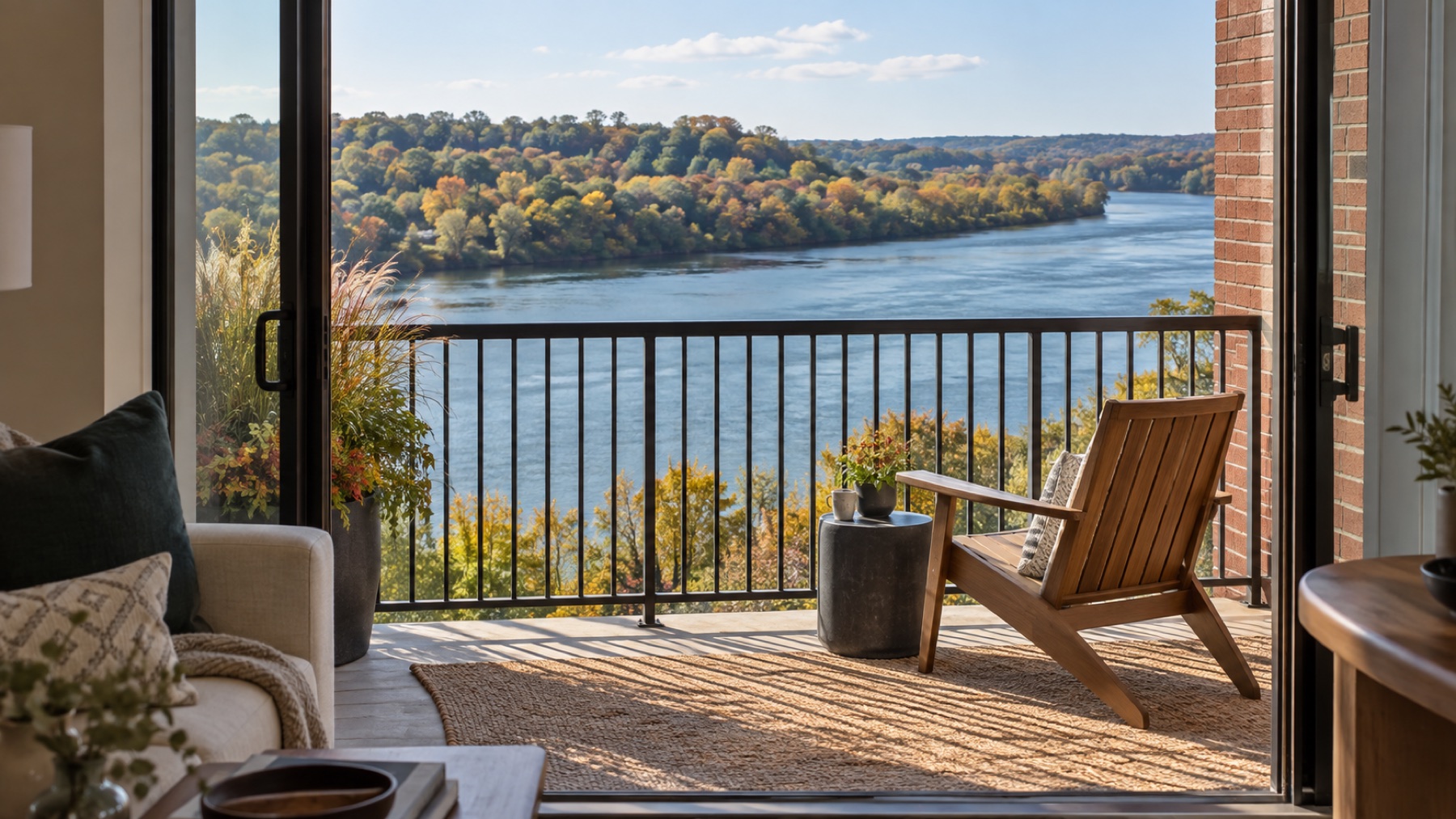
Plan condo photographs as a sequence that explains the home: main space, connecting rooms, useful details and accurately labeled views. Show the outlook from recognizable positions in the unit, establish editing boundaries and confirm media rights. Review the published gallery against the property facts and current condition.
Key takeaways
- Connecting images help buyers understand the floor plan.
- Label common-area views and virtual additions accurately.
- Correct captions and distributed images when material property facts change.
In this guide
- Plan a photograph sequence that follows the home
- Photograph a river view from positions a buyer can recognize
- Set editing boundaries before the images are delivered
- Inspect the gallery as a buyer would before launch
- Which images should you replace if the property changes?
- Write different shot lists for the Lofts and a Terra Springs brownstone
- Discuss the media brief with Richard McDonough
Plan a photograph sequence that follows the home
A gallery should help someone build a mental floor plan. Start with the main space, then show how the kitchen, dining area, rooms and outdoor areas connect. A series of attractive close-ups can leave the buyer unsure which rooms are adjacent or how the home is entered.
| Image role | What to include | What it explains |
|---|---|---|
| Main living image | Usable room, furniture scale and relevant windows | The principal space |
| Connecting view | Two adjoining areas in one accurate frame | How circulation works |
| Kitchen and dining | Work area and relationship to dining | Daily use |
| Room-specific view | Door, window or storage where useful | Layout and function |
| Outdoor or view image | Actual vantage point identified | What the occupant can experience |
| Building context | Clearly labeled common or exterior space | Where the unit sits in its setting |
Use detail images after the layout is clear
A finish, built-in or fixture can deserve a close-up when it helps explain a verified improvement. Give it context first. A buyer should not have to infer the size of the kitchen from a photograph of a faucet or wonder whether a terrace belongs to the unit.
Ask the photographer which room relationships are difficult to capture. A floor plan or an additional connecting image may explain them better than forcing every space into one wide shot.
Use the preparation hub to coordinate this photography visit with the work that must finish first.
Photograph a river view from positions a buyer can recognize
Document the view from ordinary places inside the unit before adding a closer detail. Identify the room and vantage point. If a balcony provides the clearest outlook, show that relationship instead of making the gallery imply the same view exists from every room.
Use a paired-image accuracy check
Pair a contextual interior image that includes the window with a view image taken from the same usable area. Compare them together. If the second image makes a distant feature look much closer, label its purpose and avoid using it as the sole representation of the outlook.
The river-view guide distinguishes scenery from shoreline or dock rights. Photography can show visible surroundings, but the property documents establish any included rights.
Record the date and conditions when seasonal changes matter. A winter view through bare trees should not be silently presented as a year-round unobstructed panorama. If you have photographs from different seasons, use them accurately and confirm the rights to publish them.
Set editing boundaries before the images are delivered
Ask what edits the photographer or marketing provider plans to make. Brightness and color correction should still leave the images representative of the property. A change that removes a permanent obstruction or conceals a condition can mislead someone evaluating the home.
| Proposed change | Question to resolve before publishing |
|---|---|
| Virtual furniture | Will viewers clearly understand that furniture was added digitally? |
| Removal of a visible defect | Would the image misrepresent the property’s condition? |
| Sky or exterior replacement | Could the change imply a different outlook or setting? |
| Wide-angle correction | Does the final image preserve believable room proportions? |
| Common-area image | Is the location labeled and access accurately described? |
Keep an accurate unaltered reference
Retain the delivered originals and the approved versions under the terms of your photography agreement. If a question later arises, the team can see what changed. Do not assume paying for a shoot transfers every reuse right. Clarify website, portal, social, print and later reuse permissions with the rights holder.
An AI-generated illustration can support general educational content when labeled as such. It should not be presented as a photograph of the condo being sold or used to prove its condition, dimensions or view.
Inspect the gallery as a buyer would before launch
- View the image order on a phone and a desktop screen.
- Check that rooms connect logically and labels match the fact sheet.
- Confirm common spaces, external views and virtual elements are identified.
- Look for private documents, reflections or access information that should not be public.
- Compare the images with the current physical arrangement.
A hypothetical listing has a bedroom photo taken before a bulky wardrobe was removed and a living-room photo taken after staging. That may be harmless if both remain accurate, but the sequence should still represent what the buyer will see. If the condition or included items changed, discuss whether replacement photographs are needed.
Give corrections to the person responsible for the marketing distribution plan. Replacing the file in one folder does not prove every published channel has updated. Keep a list of the pages or providers that need the new version.
The final acceptance question is simple: could a visitor identify the principal spaces and recognize the property from these images? If the gallery creates a different expectation, revise the images or their explanations before relying on more promotion.
Which images should you replace if the property changes?
Replace or correct an image when it materially misstates what the buyer will see or receive. A removed included fixture, newly completed repair or changed outdoor condition may deserve attention. A minor movable styling change can be less consequential, but the gallery should still remain an honest guide to the unit.
Check the image and caption together
A photograph can be accurate while its caption is wrong. If a common terrace is labeled private, changing the image will not fix the rights claim. Correct the label and the related description, then check the published versions.
Keep a small image register with the approved filename, room or location, date, rights information and any required label. It helps the listing team avoid reintroducing an old or unapproved photograph when making later updates.
If an image belongs to a previous listing or another photographer, obtain the appropriate permission before reuse. Public availability does not establish a right to copy it into the current marketing.
Write different shot lists for the Lofts and a Terra Springs brownstone
For a unit at the Lofts of Stillwater, show the living area and its actual outlook together, then the route through the remaining rooms. For a Terra Springs brownstone, add level-labelled plans and connecting images of the stairs and entries. Ask a reader unfamiliar with the property to trace the route from parking to the kitchen before approving the gallery.
Discuss the media brief with Richard McDonough
Richard McDonough’s St. Croix River property page includes river-view condominium context. Ask how your unit’s actual outlook should be documented and what media his proposed service includes.
His public listing record is evidence of local representation, not permission to reuse old listing photographs. Confirm the photographer, usage rights, delivery scope and approval process in your marketing plan. The images used in this handbook are generated illustrations and do not depict his listings.
Prepared as general seller education. Confirm property facts and transaction requirements with the relevant professionals. Read our source and editorial approach.
Have a question about your condo?
Put the information into the context of your own move.
Or open the seller checklist